

It has been a long time since I last wrote anything here.
For a while, I kept telling myself that I would come back to this blog when things slowed down. I imagined there would be a quiet evening, a clean desk, a cup of coffee growing cold beside my laptop, and a long stretch of time that belonged completely to myself. I imagined I would sit down and write about the small changes in my life, about the things I had been learning, about the cities I had been moving through, about the person I was becoming without even noticing it.
But life rarely leaves such perfect openings.
The days kept passing, one after another, and somehow each of them had its own reason to be full. There were internship applications, project meetings, deadlines, reports, messages that needed replies, tasks that looked small but quietly swallowed half a day. There were mornings when I woke up already thinking about what I had forgotten to do, afternoons spent staring at screens, nights when the city outside the window became a blur of lights while I was still trying to finish something that should have been done earlier.
At first, not updating felt temporary. I thought I was only pausing for a week or two. Then one week became a month, and a month became several. The blog stayed quiet. The drafts stayed unfinished. The thoughts I meant to write down continued to appear, but only briefly, like reflections on a train window. Before I had time to catch them, they were gone.
It is strange how silence grows. At the beginning, it feels like a small gap between two sentences. Later, it becomes a room you have not entered for a long time. You know everything is still there, the old words, the old self, the old desire to make sense of life through writing. But when you finally return, you hesitate at the door. You wonder where to begin.
So maybe I should begin with the simplest truth.
Time has passed too quickly.
When I first came to Singapore, I did not think too much about how long a year would feel. A year sounded like a generous amount of time. It sounded wide enough for change, for discovery, for loneliness, for growth. It sounded like something I could enter slowly. I thought there would be enough time to understand this place, to build routines, to meet people, to get lost and then find my way again.
But a year is not as long as it sounds. At least not when you are living inside it.
From a distance, a year seems like a complete shape. It has weight and structure. It feels like a chapter with a beginning, a middle, and an end. But when you are actually moving through it, it does not feel like a chapter at all. It feels like a collection of ordinary mornings, repeated commutes, meals eaten in a hurry, conversations half remembered, and evenings when you are too tired to think clearly. It is not dramatic most of the time. It does not announce itself. It simply slips by, quietly and persistently, until one day you look back and realize that the landscape behind you has changed.
I still remember the beginning.
I remember arriving in Singapore and stepping into the heat for the first time. It was not the kind of heat that rises and falls with the hour. It did not seem to belong only to summer, or to noon, or to certain streets where the sun had been shining too long. It was everywhere. It was in the airport air as soon as the doors opened. It was in the taxi line, in the trees by the road, in the heavy green leaves that seemed to carry the whole tropical sky on their backs. It was in the air before I had time to understand the city.
Singapore’s heat has a way of making itself known without needing to be violent. It is steady, humid, and patient. It does not attack you suddenly. Instead, it surrounds you. It touches your skin, settles into your clothes, and follows you even when you are standing still. In the beginning, I noticed it constantly. Later, I stopped noticing it as much, which might be another way of saying that I had begun to belong to the rhythm of the place, at least on the surface.
During my first weeks, everything felt new in a very specific way. The MRT lines, the bus stops, the hawker centers, the sheltered walkways, the sudden afternoon rains, the rows of malls connected so smoothly that you could almost move through the city without ever fully stepping outside. I learned how to read the signs, where to transfer, which exits led to which streets, which food courts were crowded at lunch, which corners were quieter in the evening.
There was comfort in that order.
Singapore is a city that knows how to function. Things arrive on time. Streets are clean. Systems work. The city has a calm efficiency that can be deeply reassuring, especially when life itself feels uncertain. There is a kind of relief in knowing that the bus will come, the train will be clean, the road will be safe, and the small machinery of daily life will not collapse without warning. In a new place, such reliability matters more than one might expect.
And yet, after some time, comfort began to take on another texture.
The days became smooth, almost too smooth. The same routes, the same stations, the same escalators descending into the same bright underground spaces. The same supermarkets, the same coffee chains, the same glass buildings reflecting the same pale sky. The same kind of rain arriving in the afternoon, quick and heavy, then leaving behind a dampness that seemed to belong not to the weather but to the city itself. Everything was convenient, but convenience can sometimes make days indistinguishable from one another.
I do not mean that Singapore is boring. That would be unfair. Every city contains more than one face, and no place is simple enough to be reduced to a single feeling. Singapore has its hidden corners, its quiet parks, its old neighborhoods, its markets, its temples, its languages, its mixture of histories and lives. It has mornings full of birdsong and evenings when the sky turns pink above the water. It has food that carries memory, and people who have lived many different versions of the city.
But the Singapore I lived in, or perhaps the Singapore my own routine allowed me to see, gradually became repetitive. It was a city arranged around efficiency, and I was becoming someone arranged around tasks. I woke up, worked, went to meetings, ate, replied to messages, worked again, slept too late, and woke up still tired. I kept moving, but not always with a sense of direction. Some days, it felt as if I was crossing the city only to arrive at another screen.
Maybe that is why I stopped writing. Not because nothing was happening, but because too much was happening in a way that left no space for reflection. Life was full, but not always vivid. Busy, but not always memorable. I was doing many things, yet the days blurred together, and when days blur together, language becomes harder to find.
Internship and projects occupied most of my attention. They gave structure to my time, but they also consumed it. There is a particular fatigue that comes from always being in progress. You are always preparing for the next thing, always responding, always improving, always catching up. Even when you rest, part of your mind remains alert, as if waiting for a notification that will pull you back into motion.
I used to think growth would feel inspiring. Sometimes it does. But more often, growth feels like being stretched quietly in several directions at once. You learn not only through success, but through exhaustion, uncertainty, and the small humiliations of realizing how much you still do not know. You learn by making mistakes and having to correct them quickly. You learn by sitting in meetings where everyone seems to understand faster than you do. You learn by pretending to be calm while trying to build competence from the inside.
This year has taught me that ambition is not always loud. Sometimes it looks like answering emails late at night. Sometimes it looks like rewriting the same paragraph of a report because the first version did not say what you meant. Sometimes it looks like staring at a problem for hours, frustrated, until the answer finally arrives in a form so simple that you wonder why it took so long. Sometimes it looks like waking up the next morning and doing it again.
I do not regret being busy. In many ways, I am grateful for it. The projects, the internships, the pressure, and the uncertainty have all become part of the year. They have shaped me, even if I cannot yet describe exactly how. I have learned to be more patient with confusion, more comfortable with incomplete answers, more aware of how quickly a person can adapt when there is no other choice.
But I also know that something was lost in the speed.
There were so many moments I wanted to preserve and did not. Small moments, almost weightless, but perhaps important precisely because of that. The walk back after a long day when the pavement was still warm from the afternoon sun. The smell of rain on concrete. The quiet inside an almost empty train. The feeling of sitting alone with dinner, not lonely exactly, but aware of being far from many things I once took for granted. The strange tenderness of realizing that a place you once found foreign has become familiar enough to leave.
Leaving is always complicated.
I am not sure whether I will return to Singapore soon. For now, it seems more likely that I will stay in Shenzhen for my internship. This thought has been sitting with me for some time. It is not dramatic. There was no sudden goodbye, no emotional final scene, no moment when the city and I looked at each other and understood that something had ended. Life rarely arranges itself so beautifully. Instead, plans changed gradually. The future shifted in small practical ways. One decision led to another. And now, without much ceremony, I find myself standing on the other side of a year.
Maybe I will not go back to Singapore. Or maybe I will, but as a visitor, not as someone living inside its routines. That possibility makes the memories feel different. The places I passed every day suddenly become scenes from a completed period of life. The station I once found ordinary becomes specific. The route I took without thinking becomes something I might one day miss. Even the repetition begins to look tender from a distance.
This is one of time’s quiet tricks. It turns inconvenience into memory, routine into atmosphere, and exhaustion into a kind of evidence that you were once there, trying, living, becoming.
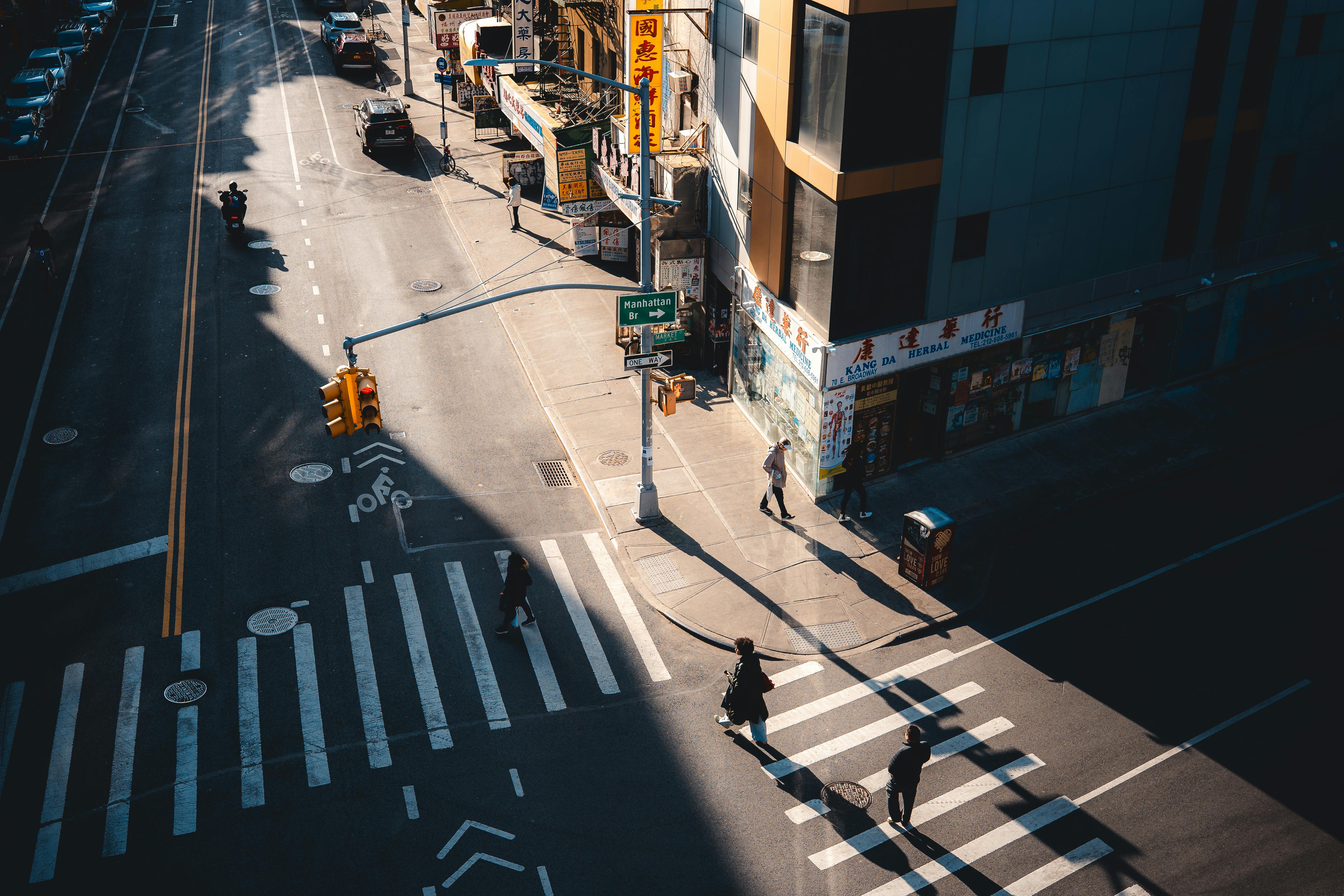
Now I am in Shenzhen, and the first thing I noticed was also the heat.
But Shenzhen’s heat is not the same.
At first, this sounds like a small observation. Heat is heat, after all. Both cities are warm, humid, and full of summer. Both can make the air feel heavy. Both can make you want to walk faster toward shade. But the more I paid attention, the more I realized that heat does not exist by itself. It is shaped by the city around it. It carries the smell, sound, rhythm, and mood of a place.
Singapore’s heat is polished. It is softened by air conditioned corridors, shaded walkways, clean stations, and buildings that seem designed to manage the climate with quiet discipline. The heat is always there, but the city has built countless ways to negotiate with it. You move from one controlled space to another. You sweat, then cool down. You step outside, then disappear into glass doors again. The heat becomes part of a system.
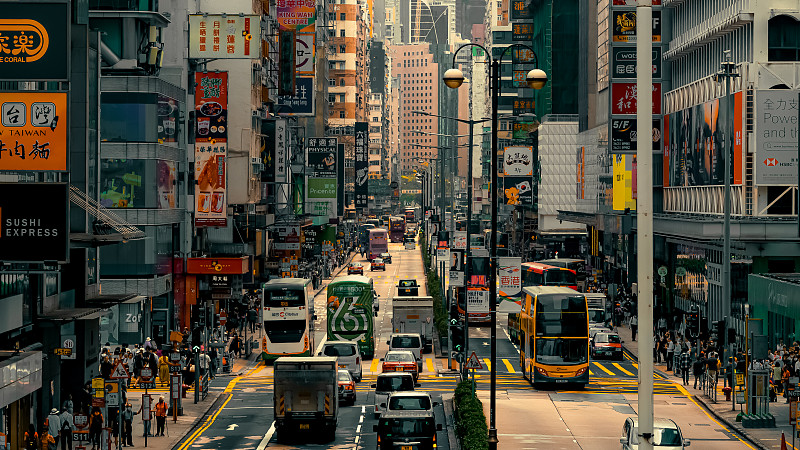
Shenzhen’s heat feels different. It is more direct, more restless, more tangled with human life. It rises from roads crowded with cars and electric bikes. It gathers around construction sites, street corners, food stalls, office buildings, and small shops with doors left open. It mixes with the smell of grilled food, wet pavement, fruit stands, exhaust, perfume, laundry, and summer rain. It comes with voices, footsteps, horns, laughter, and the clatter of a city that is still building itself while already overflowing with life.
If Singapore’s heat wraps around you like a damp cloth, Shenzhen’s heat presses against you like a crowd.
There is an energy here that I had almost forgotten. Not because Singapore has no energy, but because Shenzhen’s energy is less restrained. It is everywhere, spilling out of restaurants, subway exits, shopping streets, residential compounds, office towers, and late night sidewalks. People move quickly here, but not in the quiet, organized way I had grown used to. They move with urgency, impatience, hunger, fatigue, and desire. The city feels alive not because it is perfect, but because it is full of friction.
After returning, I realized how much I had missed this kind of imperfection.
There is noise here. There is mess. There are moments when the streets feel too crowded, when traffic feels chaotic, when the air feels thick, when conversations overlap until they become a kind of urban weather. There are small inconveniences that remind you that life is not always carefully arranged for smoothness. But within all of this, there is something warm, something human, something difficult to translate.
In Chinese, we call it yan huo qi.
It is often translated as the smell of fireworks, or the smoke and fire of everyday life, but neither translation fully captures it. It is not simply about smoke, food, or noise. It is the feeling that ordinary life is happening close to you. It is the sense of people living, eating, arguing, working, resting, rushing home, meeting friends, buying fruit, waiting for buses, sharing tables, and carrying their own private worries through public streets. It is the warmth of daily existence made visible.
In Shenzhen, yan huo qi appears everywhere.
It is in the breakfast shops in the morning, when steam rises from buns and noodles while office workers stand in line with tired faces and hurried hands. It is in the convenience stores glowing late at night, where someone buys a bottle of water, someone else pays for instant noodles, and the cashier scans everything with the calm efficiency of someone who has seen thousands of passing lives. It is in the small restaurants after work, where tables are crowded, conversations are loud, and the air smells of spice, oil, and relief. It is in the delivery riders waiting outside buildings, checking their phones, adjusting their helmets, then disappearing into traffic again.
It is in the fact that the city never feels fully still.
Even late at night, Shenzhen seems to keep a small lamp on somewhere. There is always a street still open, a shop still closing, a person still walking, a window still lit. The city does not sleep in a romantic way. It sleeps unevenly, practically, with one eye open. It rests the way ambitious cities rest, briefly and lightly, as if afraid of missing the next chance.
This makes Shenzhen exhausting, but also strangely comforting.
In Singapore, I often felt that life was cleanly divided into spaces. Work was here, rest was there, movement happened through designed channels. In Shenzhen, everything feels closer together. Work leaks into dinner. Dinner spills onto the street. The street carries you into conversations, errands, memories, and sudden thoughts. Life is less polished, but more immediate. You do not have to search for signs of existence. They are pressing around you from every direction.
Perhaps that is what I needed after a year of smooth routines.
Coming back did not feel like returning to an old self. It felt more complicated than that. I am not exactly the person who left. A year abroad, even a year that passed quietly, changes your sense of distance. You become aware of how habits are formed by environment, how quickly the strange can become normal, how easily normality can become invisible. You learn that no city is simply a place. A city is also a version of time, a way of arranging attention, a rhythm that enters your body before you notice it.
Singapore taught me steadiness. It taught me how to live inside order, how to move through a system, how to appreciate silence, cleanliness, and predictability. It gave me a year of disciplined days. It gave me space to work, to think, to adjust, and to grow in a controlled environment. Even when I felt tired or repetitive, I was learning something from that repetition.
Shenzhen reminds me of pulse.
It reminds me that life is not only something to be optimized. It is not only about finishing tasks, building skills, collecting experiences, or moving efficiently from one goal to another. Life is also about texture. It is about the unevenness of streets, the smell of dinner in the air, the voice of someone calling across a room, the small chaos of people trying to make a living. It is about moments that do not look important on a resume but somehow make a day feel real.
Maybe that is why the contrast between the two cities feels so strong to me now.
Singapore is like a sentence written with careful punctuation. Shenzhen is like a paragraph still being revised while people are already reading it aloud. Singapore gives you clarity. Shenzhen gives you heat, noise, appetite, and movement. Singapore teaches you how elegant a city can be when everything is planned. Shenzhen teaches you how alive a city can feel when nothing ever seems completely settled.
I do not want to romanticize either place.
It would be too easy to say that Singapore is orderly but dull, or that Shenzhen is messy but alive. The truth is more layered. Order has its own beauty. Mess has its own cost. Efficiency can be a form of care. Noise can become overwhelming. A clean city can hide loneliness. A lively city can hide exhaustion. Every place gives something and takes something away.
What matters, perhaps, is not deciding which city is better, but noticing what each city awakens in me.
In Singapore, I became more aware of time as structure. My days had frames. The city encouraged planning, discipline, and a certain quiet independence. I learned to be alone without always feeling abandoned. I learned to find comfort in routine, even when routine became repetitive. I learned that peace can be useful, even if it sometimes feels empty.
In Shenzhen, I become more aware of time as movement. The city does not allow me to stay too still inside my own thoughts. It pulls me outward. It reminds me that everyone is carrying something, chasing something, enduring something. Here, time feels less like a schedule and more like a current. You enter it and are carried forward by the force of other people’s lives.
This difference has made me think about what I want from the next stage.
For a long time, I measured life by progress. I wanted to know whether I was moving forward, whether I was learning enough, whether I was doing what I was supposed to do. These questions still matter. They are part of growing up, part of becoming responsible for one’s own path. But lately, I have started to feel that progress is not the only measure of a life. There is also presence. There is also the ability to notice where you are, what you feel, what kind of person a place is making you become.
I spent much of the past year trying to keep up. I do not blame myself for that. There are seasons when keeping up is already an achievement. But now, as another internship begins and another city opens around me, I want to be more attentive. I want to remember that time will pass whether or not I write it down. But when I do write, time becomes less vague. It becomes something I can hold for a moment.
Writing does not stop life from moving. It only leaves a trace.
Perhaps that is why I am returning to this blog now. Not because I suddenly have everything figured out, but because I do not. Not because life has become quiet, but because it has remained busy in a way that makes reflection necessary. I want to record this transition before it becomes another blur. I want to remember what it felt like to stand between Singapore and Shenzhen, between one kind of heat and another, between a year that has ended and a stage that has not fully begun.
There is a particular feeling that comes when you realize you are leaving a place without fully knowing what it meant to you. While living there, you may complain about the repetition, the weather, the cost of living, the distance from home, the small frustrations of daily routine. But once you begin to leave, even mentally, the place softens. You remember the way evening light fell on certain streets. You remember the quiet after rain. You remember ordinary meals, familiar platforms, the feeling of walking back alone and knowing exactly where to turn.
Memory is generous in that way. It edits gently. It does not erase difficulty, but it gives difficulty a frame.
So when I think about Singapore now, I think not only of monotony, but also of the strange beauty inside monotony. I think of how many days I repeated without understanding that repetition itself was becoming part of me. I think of the discipline of living in a city where everything seemed to work, and of the loneliness that sometimes appeared precisely because nothing dramatic was wrong. I think of myself one year ago, new to the city, carrying questions I could not yet name.
And when I think about Shenzhen, I think of heat rising from the pavement, of people eating outside in the evening, of the feeling that life is happening too close and too loudly to ignore. I think of a city that does not ask me to admire it from a distance, but pulls me into its noise. I think of the strange comfort of being surrounded by signs of ordinary survival. Everyone is tired. Everyone is hungry. Everyone is going somewhere. Somehow, that makes me feel less alone.
Maybe this is what it means to move between cities. You do not simply compare them. You let them reveal different parts of you.
One city teaches you restraint. Another teaches you appetite. One city gives you order. Another gives you smoke. One city smooths the edges of life. Another reminds you that edges exist. And in between them, you begin to understand that home is not always a fixed location. Sometimes home is a temperature your body remembers. Sometimes it is a street smell. Sometimes it is a language overheard in passing. Sometimes it is the ability to recognize yourself in the middle of a crowd.
I do not know how long I will stay in Shenzhen. I do not know whether this internship will become another turning point, another routine, another memory I only understand after leaving. I do not know when I will return to Singapore, or whether returning will feel like going back or simply visiting a finished chapter. The future remains unclear, but perhaps it has always been that way. We only pretend otherwise when life is stable enough to make uncertainty less visible.
For now, I am here.
I am in the heat of Shenzhen, in the noise, in the movement, in the thick summer air. I am carrying Singapore with me in small invisible ways. The year there did not disappear simply because I left. It remains in my habits, my sense of time, my tolerance for humidity, my memory of certain stations, my understanding of what it means to live away from home. It remains in the version of myself that learned to keep going even when the days felt repetitive.
And Shenzhen is already beginning to write over me too.
It writes in a faster hand. It writes with brighter lights, louder streets, and warmer nights. It writes with the smell of food after work, with the impatience of elevators, with the restless hope of a city built by people who came from somewhere else and decided to stay, at least for now. It writes with heat that does not merely surround the body, but wakes it.
Maybe this is the real reason time feels so fast. We are always being written by the places we pass through, even when we think we are only busy with work, projects, and plans. We are shaped quietly by weather, streets, routines, meals, and departures. By the time we stop to look back, we have already changed.
A year ago, Singapore was unfamiliar. Then it became routine. Now it is becoming memory.
Shenzhen was once familiar. Then distance changed it. Now I am learning it again, not as the person I used to be, but as someone returning with a year of another city in his mind.
That is the strange gift of leaving. It makes return possible in a new way.
I used to think that coming back meant closing a circle. Now I think it might be more like opening another one. The city is familiar, but the eyes are not. The streets are known, but the feelings have shifted. Even the heat is different because I am different. I can compare it now. I can feel the space between two climates, two rhythms, two versions of daily life. I can stand in Shenzhen and suddenly remember Singapore, then remember Shenzhen more clearly because of Singapore.
Perhaps this is enough for now.
I do not need to summarize the year perfectly. I do not need to turn it into a lesson too quickly. Some experiences should remain slightly unfinished, like letters we are still learning how to read. What I know is simple. I have been away. I have been busy. I have worked, adapted, grown tired, grown stronger, and let too many days pass without writing. I spent a year in Singapore before I fully realized it. I may not return soon. I am now in Shenzhen, where the heat feels different, where life feels closer to the skin, where the city reminds me of smoke, food, voices, and the stubborn warmth of ordinary days.
So this is not a grand return to blogging. It is only a small beginning after a long pause.
A note to say that I am still here.
A note to say that time has passed, and I have passed with it.
A note to say that some years do not announce themselves as important while they are happening. They simply gather quietly in the background. Then one day, under a different kind of heat, in a different city, you finally feel their weight.